
The short answer
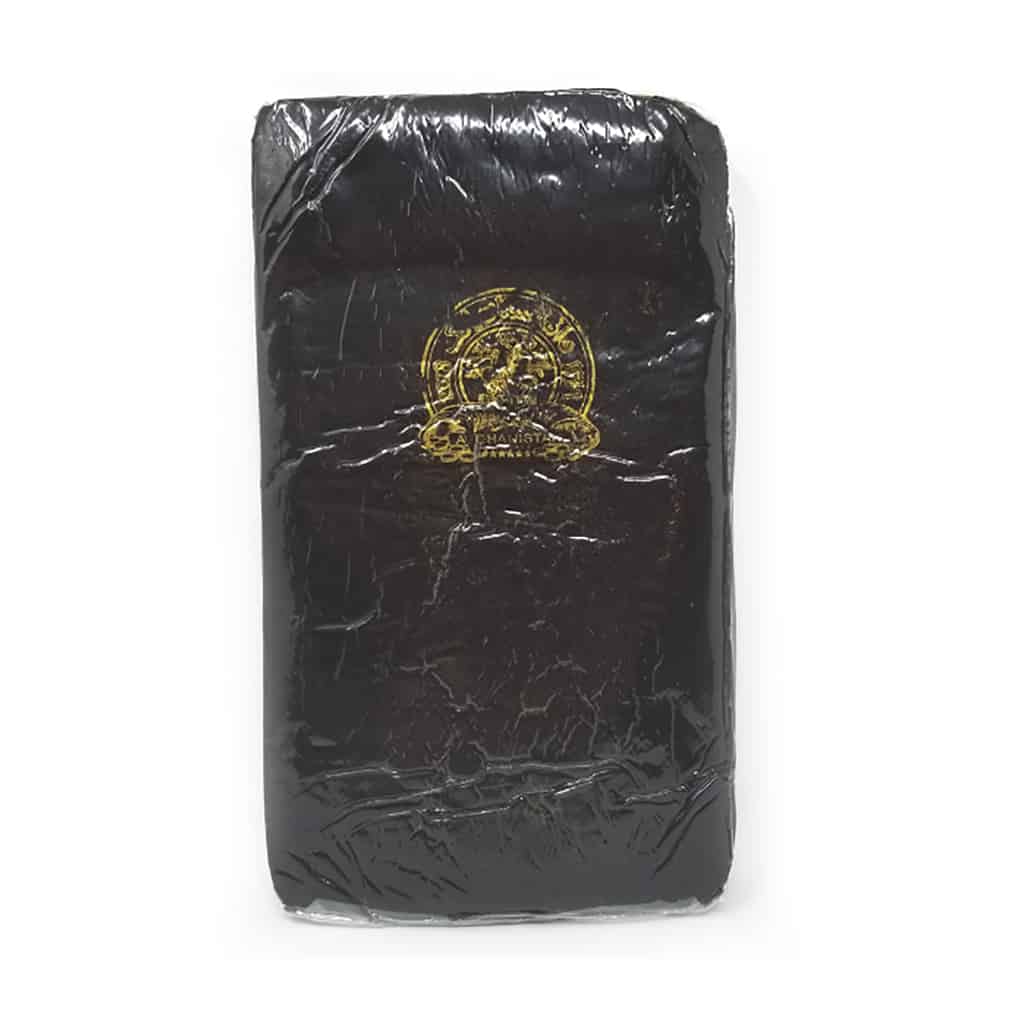
Afghan hash is pressed cannabis resin from Afghanistan, one of the oldest hash-making countries in the world and, according to a 2010 UN survey, its largest producer. It is usually dark, soft and earthy. Top Shelf BC has four Afghan imports in stock, from $35 for 3.5g to $275 for 28g.
What the shelf shows
- Top Shelf BC has four Afghan hashes in stock: Afghan Mazar Sharif, Maddosh Kabul, Gevalia Afghan and Afghani Sword.
- All four cost $140 for 14g and $275 for 28g, which works out to about $9.82 a gram at the ounce.
- Afghan Mazar Sharif is the only one sold by the single gram, at $10.
- A 2010 UN report found Afghanistan had become the world’s largest hashish producer, estimating 1,500 to 3,500 tons a year.
- Leafly describes hash as compacted cannabis resin that is brown in colour and more potent than cannabis flower.
Ask anyone who has been smoking hash for a few decades what the real stuff looks like and there is a good chance they describe Afghan. Dark on the outside, softer inside, a smell that is earthy and a little spicy, and a block that warms in your fingers until you can roll it like putty. It is the style a lot of longtime smokers picture when they hear the word hash, and it is still made the old way.
This guide covers where Afghan hash comes from, what sets it apart, the four Afghan hashes Top Shelf BC has in stock right now, what they cost, and how to get the best out of a block.
What Afghan hash is
Leafly defines hash as compacted cannabis resin, or kief, that is brown in colour and more potent than cannabis flower. The traditional dry-sift method shakes dried cannabis over a series of screens so the resin heads fall through, then presses that loose powder into a solid block.
Afghan hash is hash made this way in Afghanistan. Leafly names Afghanistan alongside Morocco and India as places with a centuries-long history of hashish. The Afghan blocks on Top Shelf BC’s shelf share a family look: dark outside, softer inside, and easy to work once warmed.
Where it comes from
In 2010 the United Nations Office on Drugs and Crime surveyed cannabis in Afghanistan and found that the country had become the global leader in hashish production. UN News reported output estimated at 1,500 to 3,500 tons a year, with large-scale cultivation in exactly half of the country’s 34 provinces.
The same report explained why Afghan hash travels so well as a name. Afghan farms were producing about 145 kilograms of hashish per hectare, against around 40 kilograms per hectare in Morocco. More resin per plant is a big part of the reputation.
The history goes back much further. A cultural history by the Afghanistan Analysts Network describes a long tradition of making resin with sieving techniques, and notes that the trade was a major economic asset in parts of the country, including Balkh in the north, around the turn of the twentieth century.
Why people call it Afghan black
If you have heard Afghan hash called Afghan black, there are two parts to that name. The Afghanistan Analysts Network traces one root to the Soviet botanist Nikolai Vavilov, who in 1924 called Afghan cannabis black hemp because it grew so darkly among fields of maize and other cereals.
The other part is marketing. The same history concludes that it was the travellers on the hippie trail who popularised Afghan Black as a brand. The colour is real, the dark outside of a good block is a big part of its look, but the name owes as much to the 1960s and 70s as it does to the plant.
Top Shelf BC also has an older piece on Afghan black hash if you want more on that side of the story.

The four Afghan hashes on Top Shelf BC's shelf
Afghan Mazar Sharif Hash. Named for Mazar-i-Sharif, the city in northern Afghanistan. Top Shelf BC’s product page describes a strong, earthy aroma and a smooth, flavourful smoke. It is the only one of the four you can buy by the single gram, which makes it the easy way to try Afghan hash for the first time.
Maddosh Kabul Hash. Black on the outside and dark greenish or brown inside, according to the product page, and it can turn a little greyish on the outside after time in the air. It is soft enough to knead easily, with a spicy smell and taste that can be harsh on the throat for anyone new to Afghan.
Gevalia Afghan Hash. The product page compares it to a fresh piece of bark: very dark brown with a green hue that gets stronger towards the middle. Expect an earthy, piney smell with hints of woody tea, and a block that is firmer outside and stickier and softer in the middle.
Afghani Sword Hash. The classic, with the signature hashish smell and taste the style is known for. A little warmth makes it more malleable and easier to work with.
What Afghan hash costs
The four share the same price at the bigger weights, so you can choose by character rather than cost.
- Afghan Mazar Sharif: 1g $10, 3.5g $35, 7g $70, 14g $140, 28g $275
- Afghani Sword: 3.5g $35, 7g $70, 14g $140, 28g $275
- Maddosh Kabul: 3.5g $35, 7g $75, 14g $140, 28g $275
- Gevalia Afghan: 3.5g $40, 7g $75, 14g $140, 28g $275
At 14g every one of them works out to $10 a gram, and at 28g to about $9.82. If you already know Afghan is your style, the half ounce is where the price per gram settles. If you are comparing, two or three 3.5g pieces side by side will tell you more than one big block.
Afghan hash against other origins
Afghan is one style among several on the hash page. Moroccan hash, like MTV Moroccan, comes from the other great hash country, though the UN figures above put Afghan yields per hectare at more than three times Morocco’s. In Nepal, Leafly notes, hash has traditionally been rolled into balls called charas; Top Shelf BC’s guide to Nepalese hash covers that tradition. From next door in Pakistan there is Pakistan Delight Black Gold.
What sets the Afghan blocks apart is the combination of dark colour, a soft and workable texture, and an earthy, spicy nose. If you like hash you can knead between your fingers and roll thin without it crumbling, Afghan is usually the one to reach for. If you prefer a drier hash that breaks up easily, look at the other origins first.

How to smoke Afghan hash
Hash will not burn well on its own in a joint, so the usual move is to warm a small piece, crumble or roll it thin, and mix it with flower. It also works in a pipe, a bong or a one-hitter, and a softer Afghan block is easy to pinch into small pieces for a bowl.
For harder pieces, a little heat from your fingers or a lighter held well away makes them easier to break up. Top Shelf BC has a full rundown of eight ways to smoke hash if you want to go further.
Start with a small amount. Hash is more concentrated than flower, and a soft Afghan block can be stronger than it looks.
How to judge and store a block
Good Afghan hash should smell clearly of hash the moment you open the bag: earthy, spicy, a little sweet. It should soften with handling. A block that stays rock hard when warmed, smells of nothing, or crumbles to dust has usually been stored badly or for too long.
Keep it wrapped and airtight, away from heat and light. A cool cupboard is fine for weeks, and the fridge is better for anything longer. Top Shelf BC’s guide on how to check for high quality hash goes into more detail.
Ordering and shipping
Afghan hash orders the same way as everything else on the site. Each order is packed discreetly and shipped by Canada Post Xpresspost with a tracking number.
Shipping is free on orders over $150, which a 14g piece of any of the four clears on its own. If an order is lost, stolen or damaged in transit, Top Shelf BC sends a free replacement. Payment is by e-Transfer or Bitcoin. The homepage review widget shows 1,164 customer reviews averaging 4.7, and the team has worked in the Canadian cannabis industry for more than 15 years.
Where it fits
Afghan hash is the old-school pick: dark, soft, earthy and easy to work with. It suits people who like rolling hash into a joint or crumbling it over a bowl, and anyone who wants to taste one of the styles that made hash famous.
Try a gram of Mazar Sharif or a 3.5g of whichever description pulls you in, then step up to 14g once you have your favourite. All four, and the rest of the imports, are on Top Shelf BC’s hash page.
Top Shelf BC's take
Afghan is the hash we would hand to someone who wants to know what hash used to be like. Kabul is the soft, spicy one you can knead in a minute. Gevalia is the piney one with the green middle. Sword is the classic.
If you cannot pick, grab a gram of Mazar Sharif and a 3.5g of one of the others and compare them over a weekend. Keep them wrapped and cool and they will hold up fine.
Frequently asked questions
What is Afghan hash?
Afghan hash is pressed cannabis resin made in Afghanistan, traditionally by sieving dried cannabis so the resin falls through screens and then pressing that powder into a block. It is usually dark on the outside, softer inside and earthy in smell. A 2010 UN survey found Afghanistan had become the world's largest producer of hashish.
Is afghani hash the same as Afghan hash?
Yes. Afghani hash and Afghan hash are two ways of saying the same thing: hashish from Afghanistan. Some sellers use Afghani in a product name, such as Top Shelf BC's Afghani Sword Hash, while others use Afghan. Either way, you are looking at the dark, soft, earthy style the country is known for.
What is Mazar-i-Sharif hash?
Mazar-i-Sharif hash is named after the city in northern Afghanistan. Top Shelf BC's Afghan Mazar Sharif Hash is described on its product page as having a strong, earthy aroma and a smooth, flavourful smoke. It is the only one of Top Shelf BC's four Afghan hashes sold by the single gram, at $10.
Why is it called Afghan black?
According to the Afghanistan Analysts Network, part of the name traces to botanist Nikolai Vavilov, who in 1924 called Afghan cannabis black hemp because it grew so darkly among other crops. The network concludes that travellers on the hippie trail then popularised Afghan Black as a brand. The dark outside of a good block helped the name stick.
How much does Afghan hash cost at Top Shelf BC?
Top Shelf BC's four Afghan hashes cost $35 to $40 for 3.5g, $70 to $75 for 7g, $140 for 14g and $275 for 28g, which is about $9.82 a gram at the ounce. Afghan Mazar Sharif is also sold by the single gram for $10. Orders over $150 ship free by Canada Post Xpresspost.
How do you smoke Afghan hash?
Warm a small piece between your fingers, crumble or roll it thin, and mix it with flower in a joint, since hash does not burn well alone. It also works in a pipe, a bong or a one-hitter. Soft Afghan blocks pinch apart easily. Start with a small amount, because hash is more concentrated than flower.